Tom Blyth & David Jonsson on New Prison Drama 'Wasteman' [EXCLUSIVE]
Written and directed by British filmmaker Cal McMau, Wasteman tells the story of two inmates in a low-security prison whose clashing approaches to incarceration cause nothing but pain for each other when they're forced to share a cell.
Taylor (David Jonsson) is nearing the end of his sentence, and looking forward to reconnecting with his young son on the outside. His new cellmate Dee (Tom Blyth) has other things on his mind: he's looking to climb the hierarchy of his new surroundings at any cost, and doesn't care who he hurts to keep himself afloat.
As Dee's reckless behavior starts to threaten Taylor's upcoming parole hearing, the two inmates struggle to live together in an institution that lacks the facilities to help them survive.
We had an exclusive opportunity to speak with Jonsson and Blyth about their work on the film, which was released in the United States on April 17, 2026.
Men's Journal: Tom, you're one of the scariest people I've ever seen in this film, and it's because your character feels so real and lived-in. As an actor, how do you strike that balance between being scary and also being somebody people can relate to?
Tom Blyth: Oh yeah, good question. It's something David and I spoke about really, really early on—not wanting this to feel like a quote-unquote 'Hollywood' version of this story. We all wanted to get on board and kind of bring that tone communally, but also individually as an actor, you look inward and you're like: "Okay, how can I make this character the real version?"
And for me it was honestly about going back to my youth. The minute I read [Dee] on the page, he reminded me of people I grew up with—people who I sidled up to so that I wasn't their enemy, but their friend. And those people are scary; a lot of the time they are charming, and they can disarm you.
There were moments where [Cal McMau] wanted the character to be way more imposing, and I was like: "No, I think this is a moment where he's a little more disarming." It was this constant balancing act to try and find that, and it took all of us.
MJ: Would you say the finished character is quite different to the one you originally saw on the page?
TB: Maybe the first draft I read, a year before coming on board, he was a bit more villainous—a bit of a brute. The writing process was incredible. As an actor you come on, and they've already gone through so many drafts, and so many versions of the charcter, and then you get to come and find more versions of the character. It's a big collaboration, but we found him eventually.
MJ: You're both highly trained in theater; do you think there's something about this fast-moving, almost real-time screenplay that appealed to your theater instincts?
David Jonsson: There is something about being ready at all times, and I think Tom and I are always ready. We shot in 18 days, and you weren't really allowed the luxury of things you might get on a bigger film set. The training tells you to be ready at all times; if you stay ready, you don't have to get ready.
TB: I think both of us, at the beginning, wished we had more time. We definitely came into it going like: "This is going to be quick, I wish we had more weeks of prep." But then you get into it, and you meet the challenge where it is. With this, I think we all came out the other end going: "Thank God we didn't have more time", because it really made it into a pressure cooker.
If we'd had more time, we might have stepped off the gas, or these characters might not have felt the pressure quite as much. But it's funny how challenges and boundaries become the thing that uplifts the work much of the time—if you're willing to meet it where it is, and not fight against it. Having a theater training allows you to do that because it keeps you light on your feet, but also grounded and responsive all the time.
MJ: A lot of Wasteman rides on the dynamic between your two characters. Could you talk a little about how you first met, and how you built this dynamic around which the film revolves?
DJ: Tom and I are good mates. We met through our agent who just thought we'd get on—and it turned out we did. We always wanted to work together, it was all about finding the right thing. We'd both read drafts of [Wasteman] before it was anywhere near getting made, and I think this was the one that we just knew was right.
Because you're friends with someone, it means that you trust them, and I think that trust is crucial to what we do. So when you have that level of trust with someone, it means that you can build on it and take risks. This film is a risk—not necessarily for us, it's just a risky film. Building that framework, that tapestry, came from our friendship and our willingness to do something special with the work.
TB: Yeah, totally. I think trust is a huge part of it. We couldn't have done this without being able to trust each other. Even down to the—spoiler alert, for the readers—the final fight scene between us with the projectile vomit. That takes trust, because you can't do that with someone you've just met that day.
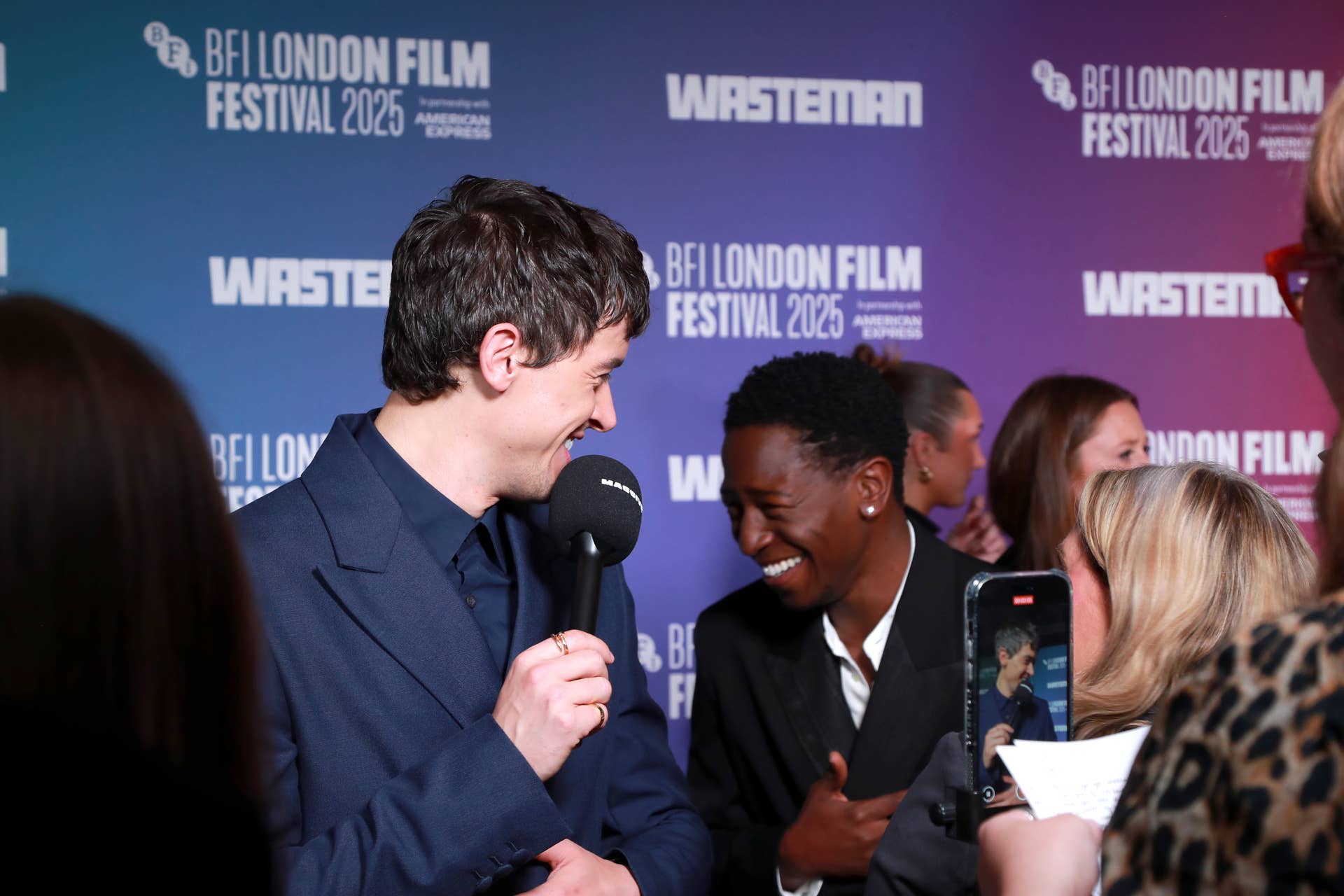
MJ: I'd love to talk about the experience of working with Cal McMau, because you've both worked with some very big names in the past—but how does the experience differ when coming back and doing a smaller-budget debut film?
DJ: I love it, man, I really do. You never want to get too jaded in the world that we're offered. And listen, I love big films, but the sensibilities that inspired me to act came from these kinds of films. I think the scale of the films we've both done with Francis Lawrence, or the Alien franchise, is what brought my family to cinemas—but what inspired me as an actor was these films.
TB: That's such a good way to put it. You've got the films that made you want to be an actor, and you've got the films that made you and your family grab a bucket of popcorn and watch a movie.
MJ: I also read about a rehabilitation charity that you worked with while shooting Wasteman—could you talk a little about their role in bringing this environment to life?
DJ: Yeah, we worked with a charity called Switchback. They help prison-leavers come back into everyday life, which is kind of crazy because there aren't many charities like them. You're locked away for a certain amount of time, then the doors open and you come back to normal life. It's a massive transition, and they do a really good job of helping people find what life is again.
They weren't just our consultants, they were like our co-stars. About 50% of our cast is prison-leavers, so they help ground the film in every sense of the word. I got a lot from them, I think we both did. They were fundamental in making the movie, and we couldn't thank them enough.
MJ: Since you two know each other very well, and you've clearly spent a lot of time together since making this film, is there something that you've both learned from each other through this process?
DJ: I've learned that Tom doesn't like prawn cocktail!
TB: I like the crisps, but I don't like a prawn cocktail. [Laughs] In all seriousness, David brings so much grace to everything he does; a lot of humility, but also the ambition of someone who's going to have one of the greatest acting careers of all time. The fact that he can do both is incredible, so I try and emulate that in what I do. It was like jazz, we got to make jazz together for a few weeks, which was really cool.
DJ: Okay hang on, hang on, that's not fair. [Laughs] Listen, the thing about Tom is that he truly is a special human being. Making this movie, I think it's going to be one of the most important things I've done. Not only because of the film, but also because you catch people in certain moments, and I think we both caught each other in a special moment. I really, really adore the work that we got to do together, and a lot of that is because of Tom. He's truly special.
The interview has been condensed and abridged for clarity.
source https://www.mensjournal.com/news/tom-blyth-david-jonsson-on-new-prison-drama-wasteman-exclusive


Comments
Post a Comment