John Cena Details His Post-Retirement Approach to Health and Fitness
John Cena has had a fruitful career, from being one of the most rooted for professional wrestlers to acting in a range of comedy and action films. And while he may have retired from wrestling, his overall health and fitness continue to remain a top priority—it's just taken a slightly different shape. Now, at 49 years old, Cena focuses more on longevity, functional strength, and listening to his body to keep him firing on all cylinders.
"The priorities have shifted from training specific to get ready for a physical performance. Now, I can really focus on correcting all the dings and scratches that I may have had over 23 years of physical performance," Cena shares with Men's Journal. "From trying to lift up giants, to trying to do a below parallel squat at 85 years old."
While chatting with Cena last week, we got a better look at how he's approaching his health and fitness in his post-retirement days, and what exactly has changed for him in this new chapter.

Getty Images/WWE
John Cena's Post-Retirement Approach to Health and Fitness at 49
Workout Split and Training Approach
For someone so well known for their brawn, it may come as a shock to find out that Cena doesn't follow a particular workout split post-retirement. He loves lifting weights, but each day for him offers a new pivot and direction, requiring constant adjustments to his training approach.
"I'm a person who loves opportunity, and as a sacrifice of that, stasis is out the window," he explains. "If I were currently working on a movie for Netflix with Jen Garner, and the days were long, could I train after work? I can, but at the risk of eating into my recovery, which is the most important thing to do good work on camera."
In that instance, he dropped his workouts down to just a couple of sessions per week instead of spreading himself too thin, often shifting his training to weekends when his schedule allowed. On the flip side, during lighter weeks with fewer commitments, he might fit in four workouts within the week.
Mobility Exercises
These days, Cena loves static stretching and makes it a point to incorporate some form of mobility training each day. He's become just as dedicated to mobility work as he is to lifting weights, with his full routine taking about 45 minutes. The primary focus is on his trouble spots: quads, hamstrings, hip flexors, and spine, recruiting a range of equipment like Sorinex's Mobility Maker Bench, a GHD, and gravity boots.
"It's kind of like if static stretching and yoga ran into each other," Cena says of his mobility routine. "And it also gives me a chance to be present and just calm down."
Preventive Care for Overall Health
Of course, fitness is important to Cena, but so are regular checkups. From dermatologist appointments and routine bloodwork to full-body MRIs and colonoscopies, he's become more focused on preventative care and seeking out the proper help rather than waiting to react once problems show up. After dealing with a laundry list of injuries throughout his wrestling career, including a pec tear and neck fusion, Cena said those "humbling" moments ultimately changed the way he views long-term health.
"Amazingly enough, the physical trauma that I would endure for the WWE helped me in this new stage of life, being like, 'Oh man, if I have a problem, I can ask for help,'" he says. "I'm trying to be an advocate for overall health. In this stage of my life, I'm an advocate for sunscreen, and I'm an advocate for getting that colonoscopy. I've talked openly about my hair transplant. There are ways out there to help. You just need to ask for help and take it from a professional. Stop taking the street smarts."
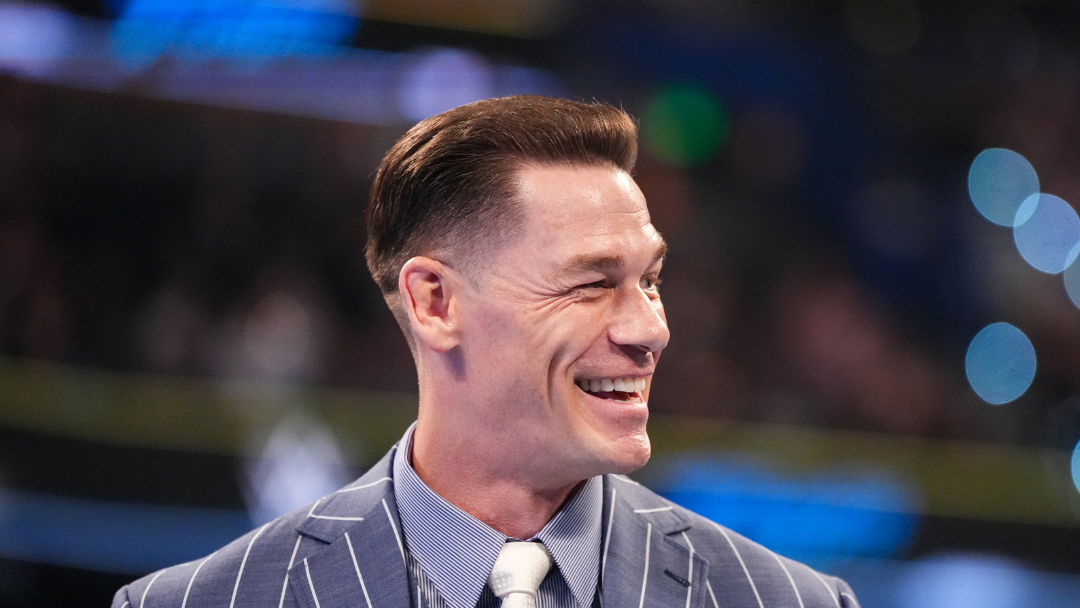
Getty Images/WWE
That mindset is exactly what led him to his current partnership with Tarsus Pharmaceuticals, which aims to raise awareness around Demodex blepharitis, a common (yet overlooked) eyelid disease caused by microscopic mites that live in and around the eyelashes, impacting roughly 25 million Americans. Cena himself dealt with symptoms like vision loss and itchy red eyes, initially chalking it up to "getting old." Eventually, that led him to visit an eye doctor and get prescribed XDEMVY for six weeks to reduce symptoms.
"I had those symptoms for so long, and I was suffering just because I thought, 'Okay, this is how life is.' No, it's not. You can get help," Cena says.
Listening to His Body
Cena once believed he could sweat out fatigue. At 49, he pays closer attention to his body and the signals he receives. There's a deeper understanding that different lifestyle factors manifest physically. For instance, if he's in the middle of his mobility routine and notices less range of motion for an exercise, he gets curious about the reasoning behind it: Was I out too late last night? Did I have an extra glass of wine? Am I stressed out about something?
"Last week, when I went to the gym, literally everything in my body, including my attitude, was grumpy, short—just nothing could cheer me up. That's the body's way of saying, 'Yo, get some rest.' So I literally drove to the gym, walked in, did a U-turn, and went home and slept for two hours," he recounts. "You can't ignore that. Maybe when I was younger, I'd try to train through it. At 49, that's where I'm going to get injured. At 29, I just would have been a shitty gym buddy."
Related: 10 Best Back Exercises for Beginners to Build Foundational Size and Strength
source https://www.mensjournal.com/health-fitness/john-cena-interview-post-retirement-health-and-fitness


Comments
Post a Comment