The No. 1 Landscaping Change That Can Make Your Garden Less Appealing to Deer
Protecting your garden against deer can seem like fighting an uphill battle, but the right tactics can help you come out on the winning side. Knowing how to manage deer starts with understanding what they like to eat, what you have in your garden, and how to adjust your garden accordingly. We tapped Thom Almendinger, director of stewardship at Teatown Lake Reservation, who has over two decades of experience in deer management, to share his expertise on keeping deer out of gardens. Spoiler alert: Native plants might just be your best defense.
It’s Not Your Imagination. There’s Been an Increase in the Deer Population
If you live in a deer zone, you’re in their habitat, and you’re more likely to have seen more deer than usual recently.
Deer populations in suburban neighborhoods are increasing for several reasons, including new developments being built on deer habitats, which leads deer to move to areas called “refugia” to find food; a lack of predators; and climate change.
The bad news: When food gets scarce in their reduced habitat, deer will find their way to people's gardens, which have plenty of food they love.
Related: How to Get Rid of Ants, Roaches, Mice, and Spiders Without Calling an Exterminator
Why Deer Are Eating Your Garden Plants
An important step to keeping deer out of your garden is understanding their eating behavior, which varies by season.
“In warmer months, deer are focused on tender leaves and twigs. In the colder months, white-tailed deer shift to twigs, buds, and sometimes evergreens,” Almendinger explains. That’s why deer in the spring and summer will take one look at your ornamental gardens and start going to town.
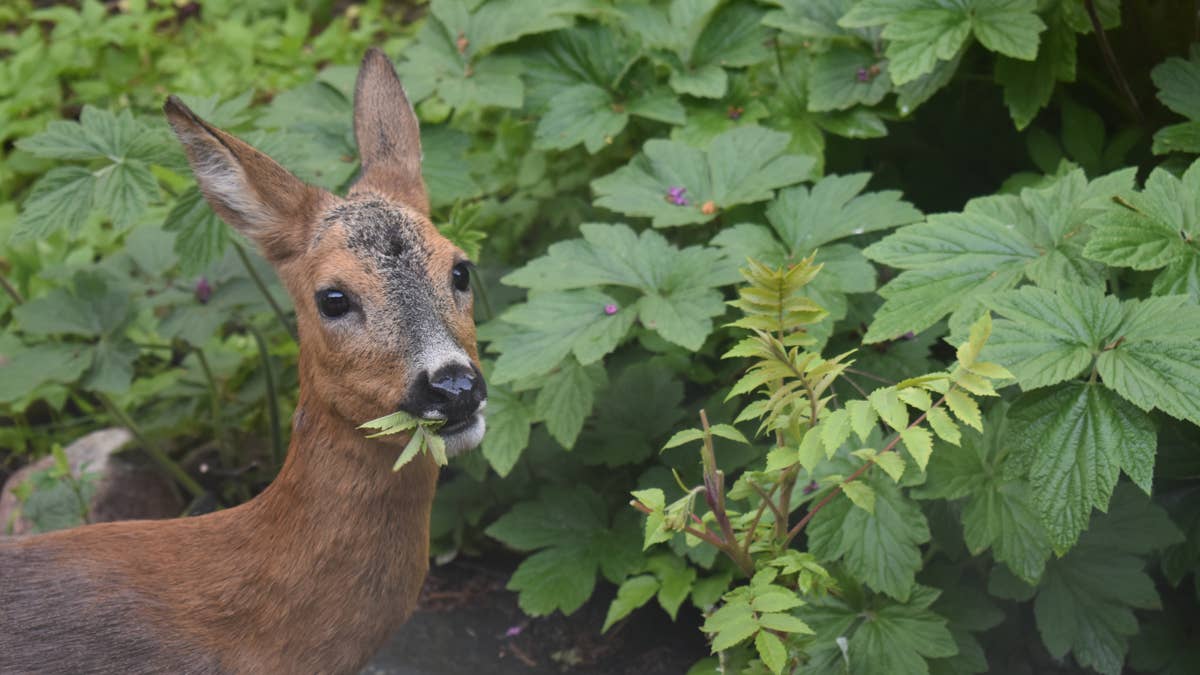
How to Keep Deer Out of Your Garden
Deer have no boundaries and will come into both your front yard and back yard if they’re not properly fenced. That said, there are different methods you can use to try to keep deer away from your garden, including natural and commercial repellents, fencing, deer alarms, and deer-resistant plants.
Natural vs. Commercial Repellents
Almendinger explains that early in his career he studied using natural vs. commercial repellents.
Here’s what he learned: “Natural repellents do not last very long on the plant and require more repeated applications. Commercial/formulated repellents are designed to last longer.”
However, deer will eventually learn to ignore even commercially produced repellents. His advice is to use different types of repellents alongside other methods used to deter deer. (More on those options below.)
Fencing
A safe, humane way to keep deer out of your garden is to create an enclosure by adding a fence. Deer don’t like confined spaces because they feel trapped and afraid that they won’t be able to jump out. That’s why placing enclosures like a fence around your garden tends to be one of the most effective solutions for keeping deer away from your yard. Tall fences will help keep deer out and drastically reduce your yard’s tick population.
Note: Installing a net or fence around individual plants can also work, but it is less visually appealing and may not fit your landscaping design.
Related: The Best Way to Fertilize and Water Your Lawn for Greener Grass, According to Pros
Motion-Activated Alarms
Another option to keep deer away from your garden is to use motion-sensor alarms that activate a high-pitched sound or a sprinkler system to scare the deer away. These can be installed near your garden and set to activate at night.
Deer-Resistant Flowers
Utilizing deer-resistant plants can be an effective way to protect your garden from deer.
Almendinger explains that “depending on [deer] population densities and access to other food, even the most resistant plants will be browsed. However, several plant species have odors, unpalatable [flavors], and even toxicity that browsing white-tailed deer will avoid.”
According to Almendinger, here are some of the best plants to add to your garden to keep deer away—i.e., plants deer typically avoid, unless food is very limited.
- Plants in the mint family, such as hyssops, monarda, and bee balm. “They have aromatic compounds in their leaves that deer mostly avoid,” he explains.
- Butterfly milkweed. This “is great for pollinators and has a bitter latex that makes it less palatable for deer,” he adds.
- Certain grasses, such as little bluestem.“Deer are browsers, which means they eat foliage and buds and do not eat grasses like cattle/horses,” says Almendinger.
- Native holly plants like inkberry holly. These “have thick, waxy, and armored leaves, which deer mostly avoid,” he notes.
Almendinger suggests planting deer-resistant plants around the perimeter of your garden or yard, “so the first plants the animal encounters are unpleasant, and it acts like a moat for defense.”
Another approach is to look at native plants in your area that have adapted to the region's weather and soil conditions, as these have evolved to be resistant to the environment, including deer.
source https://www.mensjournal.com/home-living/how-to-keep-deer-out-of-garden
Comments
Post a Comment