Meet the Woman Behind the Oldest Single Malt in Scotch History: The Balvenie Eighty-Eight Year Old
Deep inside the cavernous, earthen-floored warehouses of The Balvenie in Dufftown, Scotland, time is not just a concept—it is a physical, breathing variable. Barrels rest in the dark for decades, silently expanding and contracting with the seasons, slowly giving up their liquid to the angels while drawing in the deep character of the oak.
For Kelsey McKechnie, the malt master at The Balvenie, monitoring this slow-motion alchemy requires the clinical precision of a scientist and the nerve of a gambler. This is especially true when she is tasked with watching over the rarest inventory in the distillery’s possession, including a legendary cask filled in 1931—the oldest single malt Scotch ever released.
Crafting The Balvenie Eighty-Eight Year Old
When a whisky sits in wood for over eight decades, the stakes are existential. As the liquid evaporates over decades, the alcohol by volume (ABV) steadily drops. If it falls below 40 percent, by law, it can no longer be called Scotch.
“If ABV is getting close to 40, that’s just a check for us that we are saying, well, do we hold our nerve or do we bottle it at this point?” McKechnie says. “Because if it’s going to go below 40 and we’re going to lose being able to call it a single malt whiskey, that’s heartbreaking for us.”
Holding her nerve paid off. When she finally made the call to move the 1931 liquid into glass, it was resting at 43.2 percent ABV. The yield was painstakingly small—just 17 bottles. But at that level of extreme rarity, a new pressure emerged: ensuring the liquid actually justified its existence and its astronomical price tag as a standalone release. (While this particular extra-aged expression is called The Balvenie Eighty-Eight Year Old, the 1931 series includes The Balvenie 12 Year Old 1931 Collection and The Balvenie 15 Year Old 1931 Collection)
When a whisky sits in oak for nearly nine decades, the wood can easily overpower the spirit, leaving behind a harsh, over-tannic trophy bottle. For McKechnie, simply having the world’s oldest age statement wasn’t enough; the flavor had to live up to the history. If the cask had been flawed, it would have forced an uncomfortable Plan B—like finishing it in another wood or blending it with other spirits to balance the harshness. Fortunately, that wasn’t necessary.
“Trying something that was distilled in 1931 and having it in its entirety is so unique, so special,” she explains. “It’s really important for us that quality is number one. Is it good enough that we want to release, and that people that do get a chance to get a hold of a bottle want to try it, and when they taste it, they’re impressed and they are in awe of what we can do at the distillery? That’s my key focus.”
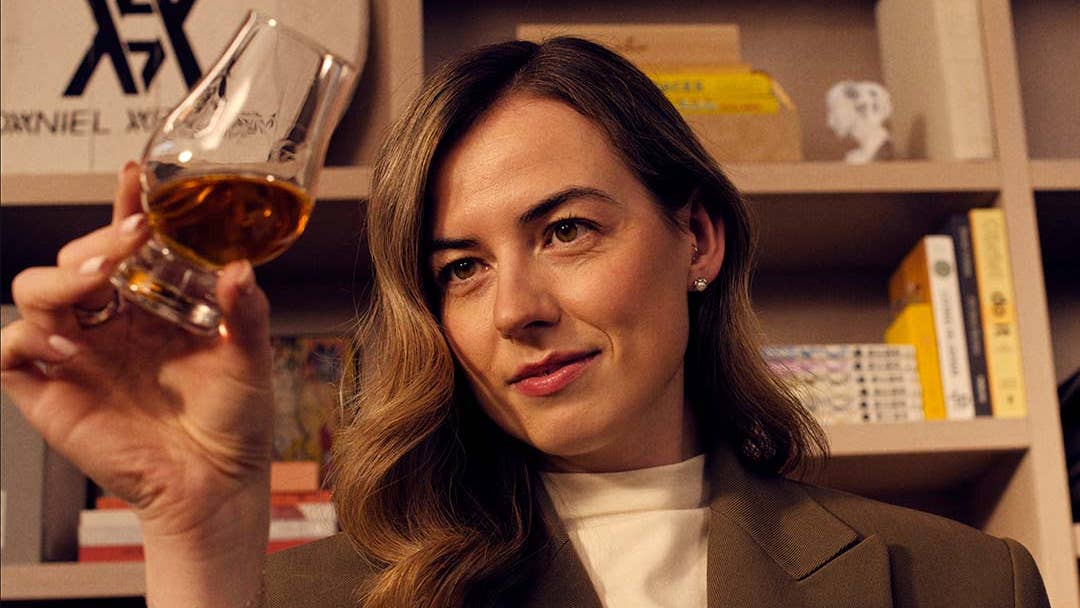
Courtesy Brand
Turning a Love of Science Into Whisky Making
Making the final call on the oldest single malt in history is a massive responsibility, especially for someone who never initially planned to be the face of a legacy Scotch brand. Unlike the multi-generational distilling families that populate the whisky world, McKechnie’s ascent was born in the laboratory. “I think it’s probably been a series of happy accidents,” she says. “I originally have a science background. I wanted to work in the lab.”
Her career began in the technical team at William Grant & Sons’ Lowlands facility, analyzing spirit yields, tracking distillation losses, and ensuring the chemical makeup of the liquid hit exact parameters. But she quickly realized that the numbers on her monitor were only telling half the story. The true magic was happening in the tasting room.
“When I would do the analysis and we’d see a number on the screen, I loved being part of the nosing panel and actually joining these two things together,” McKechnie recalls. “Saying, ‘Well, that number is increasing, and I can smell more of a pear note,’ or ‘The vanilla note has dialed down.’ I loved all that.”
That curiosity caught the attention of The Balvenie’s legendary former malt master, David Stewart, who brought her under his wing. Walking the warehouse floors with him, she learned that the spreadsheets and lab equipment could only take a whisky so far.
“I think I’ve probably just through osmosis taken in so much of the style of how David blended whiskey,” she says. “If we were to write our recipes down on a piece of paper and give them to anyone in the whiskey industry, they still wouldn’t be able to recreate what we do because the missing element is so much about feeling and how we analyze the spirit and giving it this element of time.”
Kelsey McKechnie‘s Philosophy Behind The Balvenie
Prioritizing intuition, patience, and quality over efficiency defines McKechnie’s tenure. She is quick to push back against the persistent consumer myth that whisky is a simple, linear equation where a darker color or a higher age statement automatically equals a superior dram.
“A lot of people think that older must be better. Absolutely not the case,” she says. “Older will definitely lock in a different flavor, especially older and well-matured casks. There’s something that cannot be mimicked. But we can have casks that are really, really full on, but they just don’t have that lovely layering effect that we want.”
Related: The Balvenie Caribbean Cask Is the Best Scotch for Rum Fans
To achieve that layering, McKechnie insists on preserving the grueling, unseen steps of the whisky-making process. One of the most critical is the purposeful marrying period. Rather than immediately bottling a vatting of casks, The Balvenie lets the blended spirits rest together in a large wooden tun for months so the flavors can seamlessly integrate.
“It needs to sit there for three or four months, seemingly doing nothing before bottling,” McKechnie says. “That is so important because that builds in a lot of the flavor. I think for a lot of people, they’d be like, ‘Yeah, save yourself the heartache and finances, and don’t bother.'”
That analytical obsession doesn’t shut off when she leaves the distillery. Even off the clock, sharing a casual glass of wine with her husband often prompts him to mutter, “Here she goes,” as she instinctively buries her nose in the glass to dissect it.
But when it comes to actually drinking a dram of Scotch at home, she strips the experience down to its basics, setting aside the lab equipment for a simpler mechanical trick.
“I like a little bit of water in there, really just to open it up, break the surface tension,” she says. “I feel like you can get so many different drams in that one sip just playing with ABV.”
It is fitting that for a woman who spends her life evaluating the passage of time—ushering near-century-old liquids through the final stages of their evolution—her ultimate drinking companion isn’t an industry titan, but rather someone who has spent his own life chronicling the slow endurance of the natural world.
If she could share a dram of The Balvenie with anyone, her answer is immediate. “Oh, it has to be David Attenborough,” McKechnie says, laughing. “His voice is like honey for one, but he’s just so interesting. You could just sit for hours and just live your life through his memories and the things that he’s seen.”
More on Whiskey
- Old Forester Debuts a $300 Vintage-Inspired Bourbon for Collector Season
- First Look Inside Men’s Journal’s Fall Whiskey Special With Nick Offerman
- The Wild Prohibition History Behind Jacob’s Pardon Bourbon
- Thursday Boot Co.’s Newest Release Isn’t a Shoe—It’s an Ultra-Rare New York Rye Whiskey
source https://www.mensjournal.com/drink/balvenie-oldest-single-malt-scotch


Comments
Post a Comment